100k
Wahu Heroes on the road
One hundred thousand riders earning more, owning their bikes, building financial identities, breathing easier — every single day.
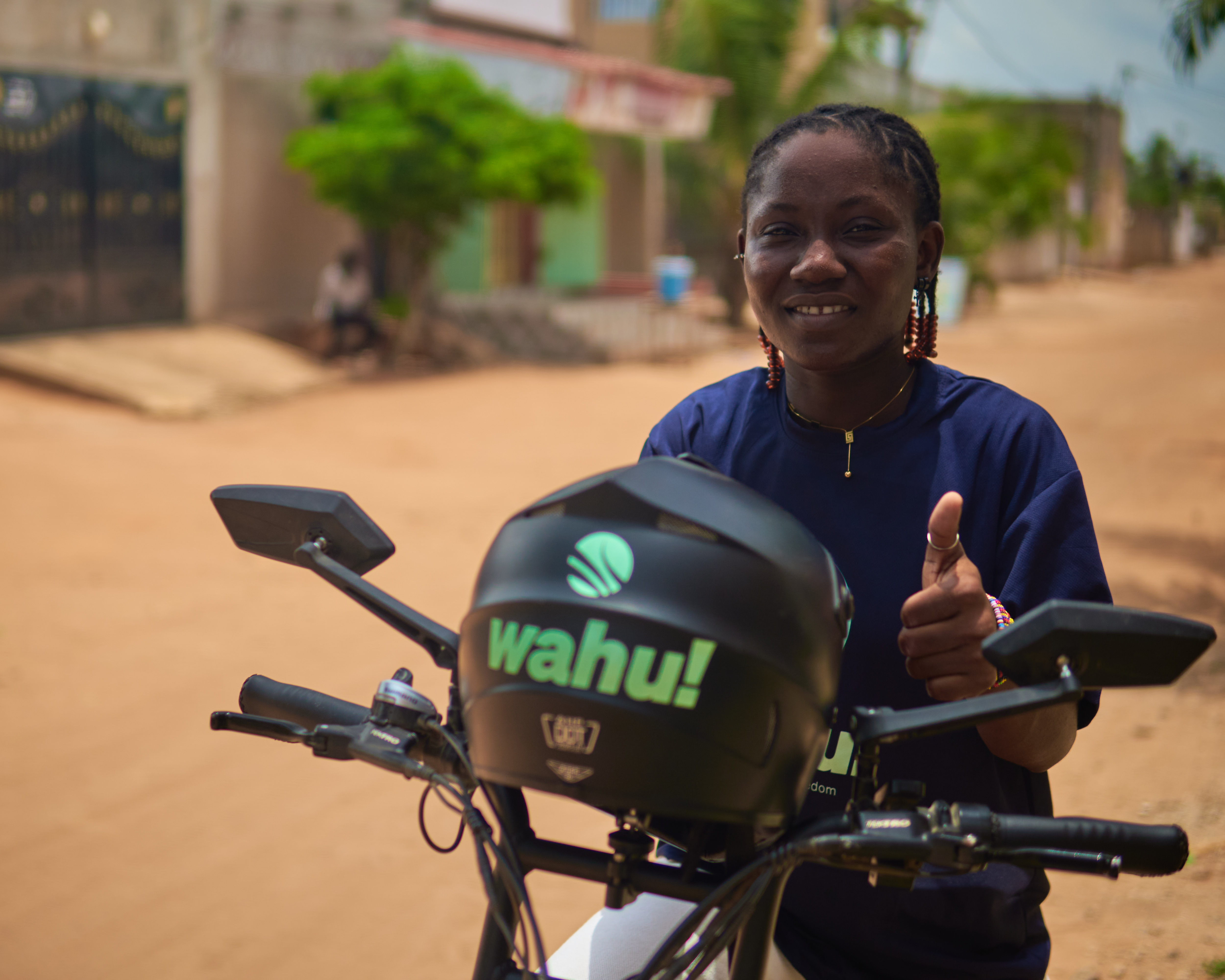
A father who keeps more of what he earns. A mother who finally has a name on a financial record. A city that breathes a little easier. This is what mobility looks like when it's built to lift people up — not just move them around.
A bike is the start of something. The day someone takes the keys, a different future becomes possible — more dignity in their work, more food on their family's table, a path to owning the bike.
Numbers and dates. Ours, on the record. Quarterly progress, in the same dashboards our investors see.
One hundred thousand riders earning more, owning their bikes, building financial identities, breathing easier — every single day.
Annual carbon savings of more than a quarter of a million tonnes — verified at the battery cell, audit-grade, credit-eligible.
From capital to code to commerce to the rider‑entrepreneur — women hold decision rights and economic stake at every stage where value is made, not just counted.
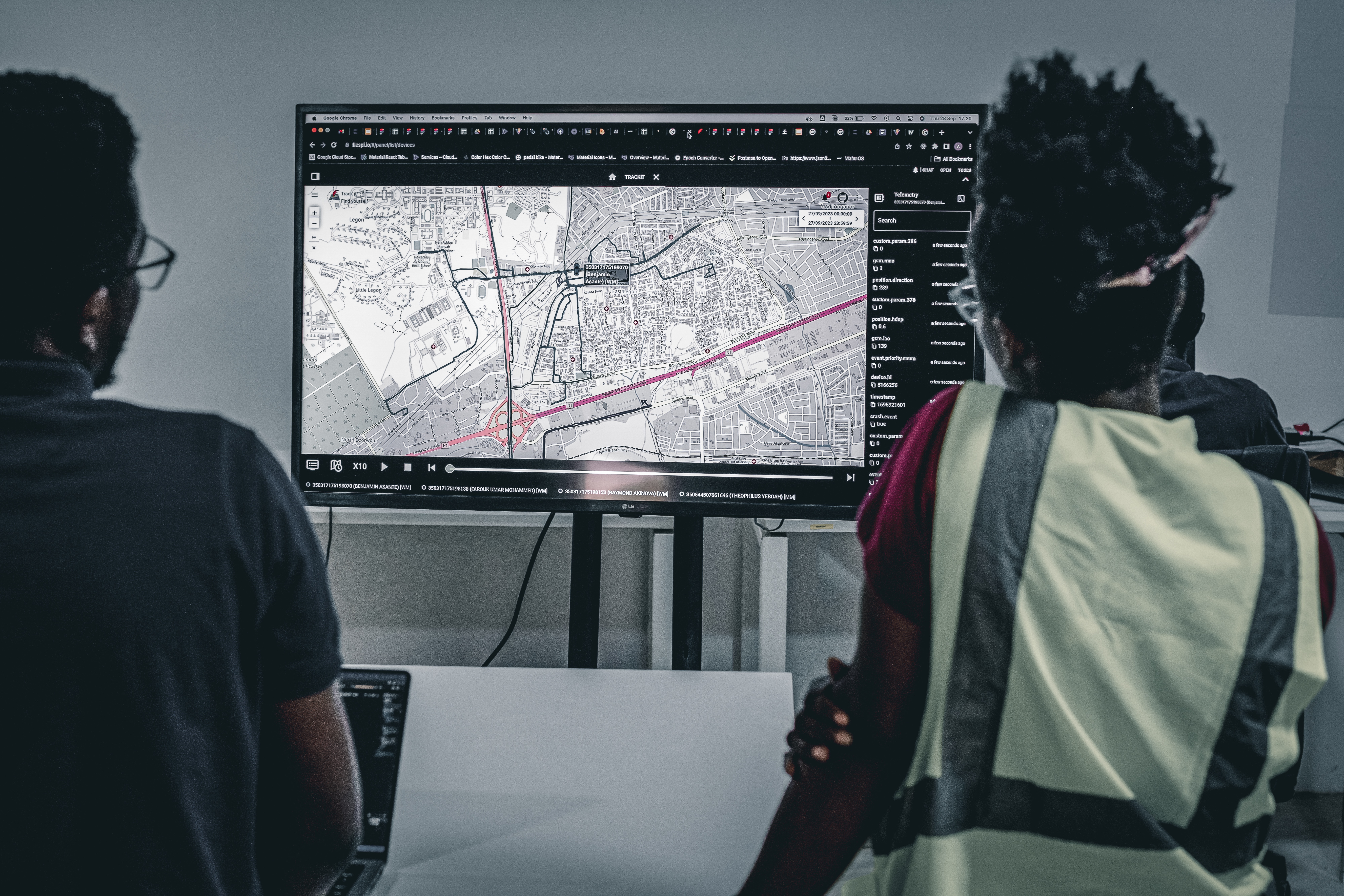
Every kilowatt-hour, every kilometer, every gram of CO₂ avoided is measured at the battery cell and tied to a real ride by a real person.
Wahu is the first electric mobility platform on the continent operating under Article 6.2 of the Paris Agreement. Ghana's Letter of Authorisation backs the contract; Switzerland's KliK Foundation — the country's official carbon offsetting body — is the offtake partner. Sovereign-backed, audit-grade, ride-level.
That matters because most carbon credits in mobility are estimated post-hoc from fleet-level averages. Ours are recorded per ride, per battery, per rider — by the same telematics that runs the business. No separate reporting layer, no estimation model, no asterisks.
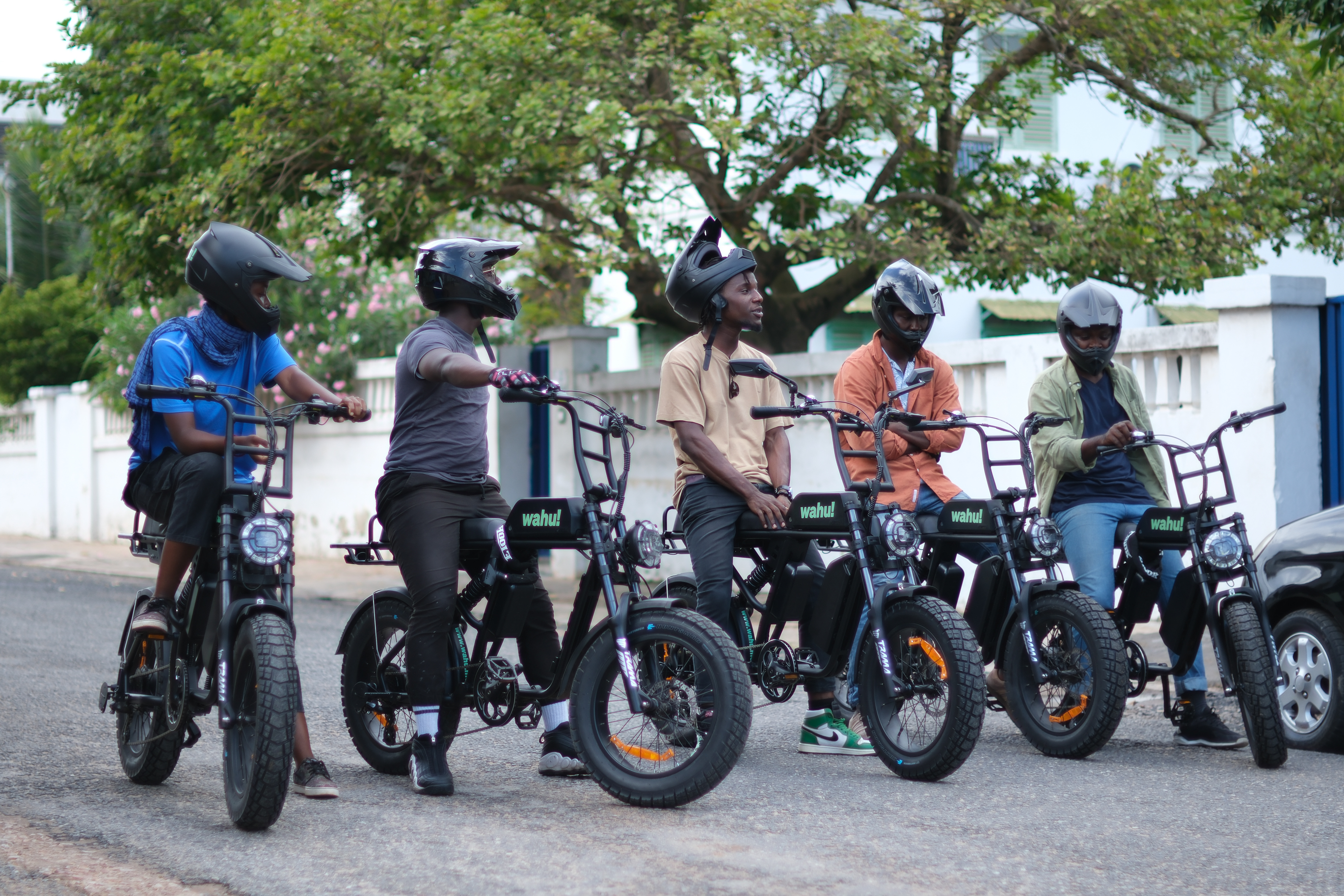
Most Wahu Heroes start with no bank account, no credit history, nothing on paper. Three months in, the data tells a different story.
The paradox of the gig economy is this: you can work twelve hours a day for years and still be invisible to the financial system. When you finally need credit — for a child's school fees, a family emergency, a home — the answer is no, because you do not exist.
Every Wahu ride builds a record. Every weekly payment becomes a data point. Within months, our riders have something they have never had before: a verifiable financial identity. Mobile money providers raise their limits. Banks open accounts. The doors that were closed begin to open.
"When I started, I had no bank account, no credit history, nothing on paper. The bike gave me earnings — but the data gave me identity. My mobile money limit went up, then up again. I am someone now."
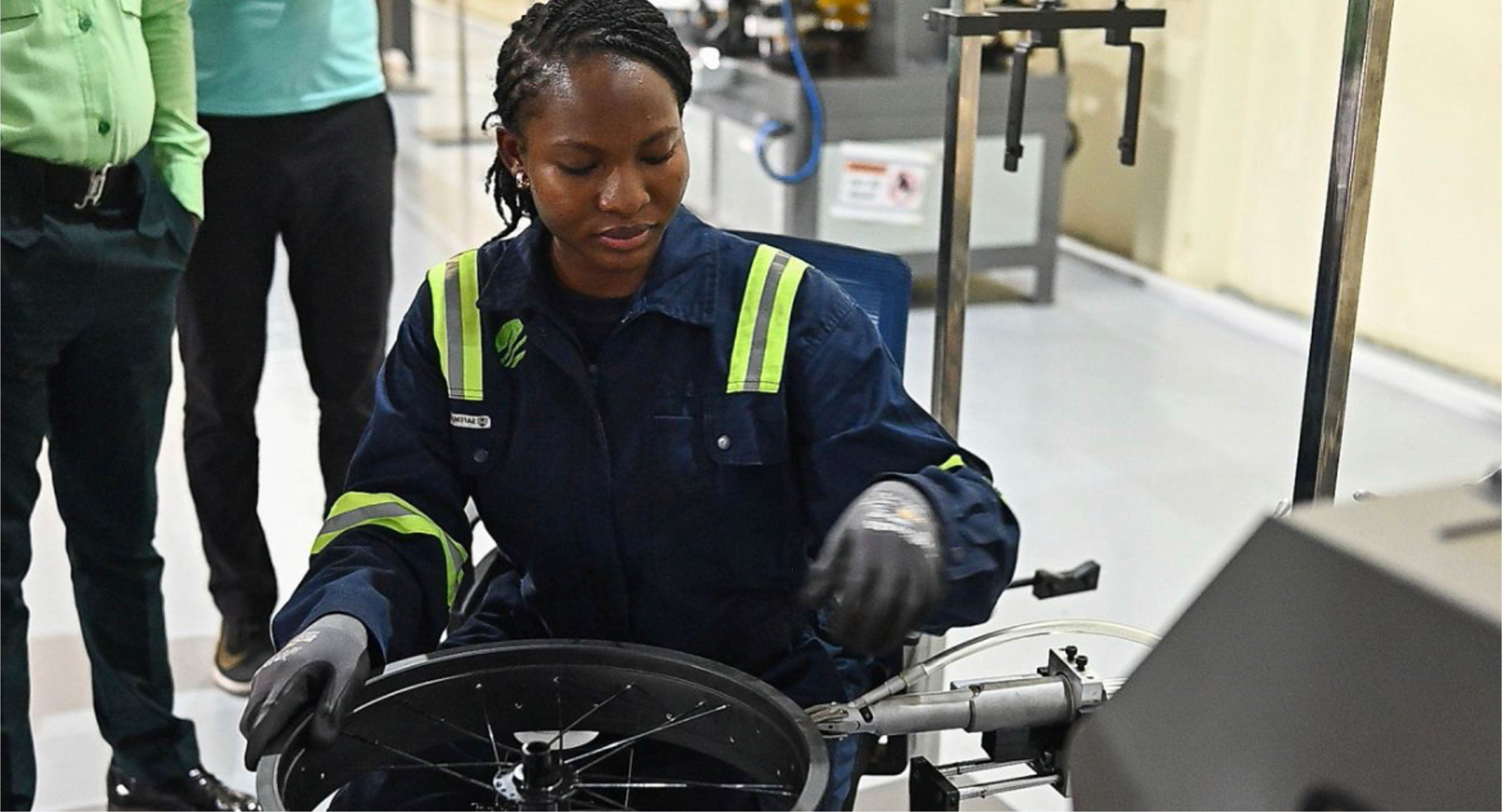
Less than 5% of gig riders in Ghana are women. Across the rest of the value chain — engineering, leadership, capital — the numbers are no better. We are building differently.
Gender is not a tick box at Wahu. It is the architecture. African women hold decision-making agency at every level of our value chain. Women sit on our cap table and our board. Women lead engineering, marketing, and field operations. Women design the bikes, train the technicians, and ride them through Accra at dawn.
We invest deliberately in the next generation — young African women entering technical trades, operations, and leadership pipelines that have historically been closed to them. From investors to board to founder, from workshop floor to delivery route, women are woven into Wahu's fabric, not bolted on.
The clean mobility transition on this continent cannot be built by half a workforce. The same comprehensive ecosystem we are building across hardware, software, and finance — we are building it across talent. Because the future of African mobility will be designed, financed, engineered, and ridden by African women, or it will not be a future worth building.
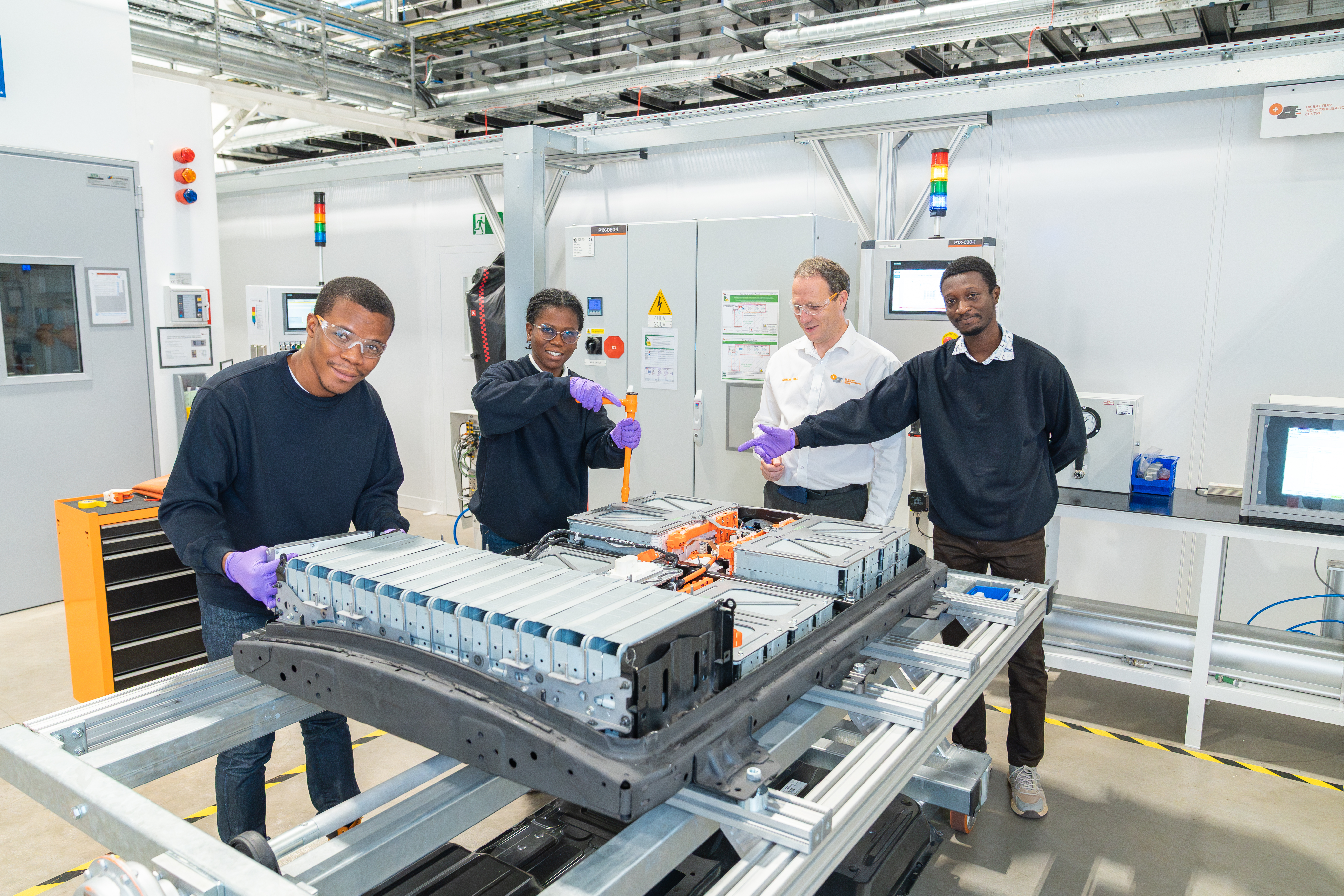
A continent's clean mobility transition cannot be imported. It has to be built — by African engineers, in African universities, with the world's best partners alongside them.
Our partnership with the UK Battery Industrialisation Centre (UKBIC) gives Ghanaian engineers hands-on access to one of the most advanced battery manufacturing facilities in the world. Our university partnerships embed Wahu inside the academic ecosystem — co-developing curricula, supervising research, and creating placements that turn students into builders.
Wahu isn't built alone. We've spent years establishing partnerships with the institutions that hold African ventures to world-class standards — Ghana's ministries, banks, and universities, alongside global climate, industrial, and academic partners. Together, we're building the ecosystem African clean mobility needs to grow: compliance-grade carbon, climate-linked finance, world-class manufacturing talent, and real pathways to ownership for the riders we serve.
Carbon Offtake
Switzerland's official carbon offsetting body and Ghana's Article 6.2 cooperative partner.
Sovereign Authorisation
Letter of Authorisation issued under Article 6.2 of the Paris Agreement.
Climate Funder
Siemens Stiftung — incubation grant for early R&D.
Debt Partner
Ghana's national development bank. Wholesale debt financing proving Wahu's path-to-ownership model at scale.
Financing Partner
Pan-African financial services group. Local debt capital backing rider asset financing across Ghana.
Industrial Partner
UK Battery Industrialisation Centre. World-class facility training the engineers building Africa's clean mobility future.
Manufacturing Partner
Design and Technology Institute, Accra. Training the precision engineers and technicians powering Ghana's EV assembly base.
Programme Partner
William Davidson Institute. Research and training programmes for riders, mechanics, and women in clean mobility.
Academic Partner
Accra-based engineering university. Pipeline for the next generation of African EV engineers, designers, and technicians.
There's a path into this work for everyone — climate funder, corporate buyer, government partner.
Carbon offtakes under Article 6.2 with sovereign Ghanaian backing. Behind every credit is a rider building a better life.
Talk to our carbon team →UNDP, donors, district governments, NGOs — if you're working on mobility, gender, climate, or rural connectivity, there's a fit.
Start a partnership conversation →There is a way in for everyone. Tell us how you would like to engage and we will come back within 2 working days with a path that fits.
Tell us how you want to engage. We reply within 2 working days.